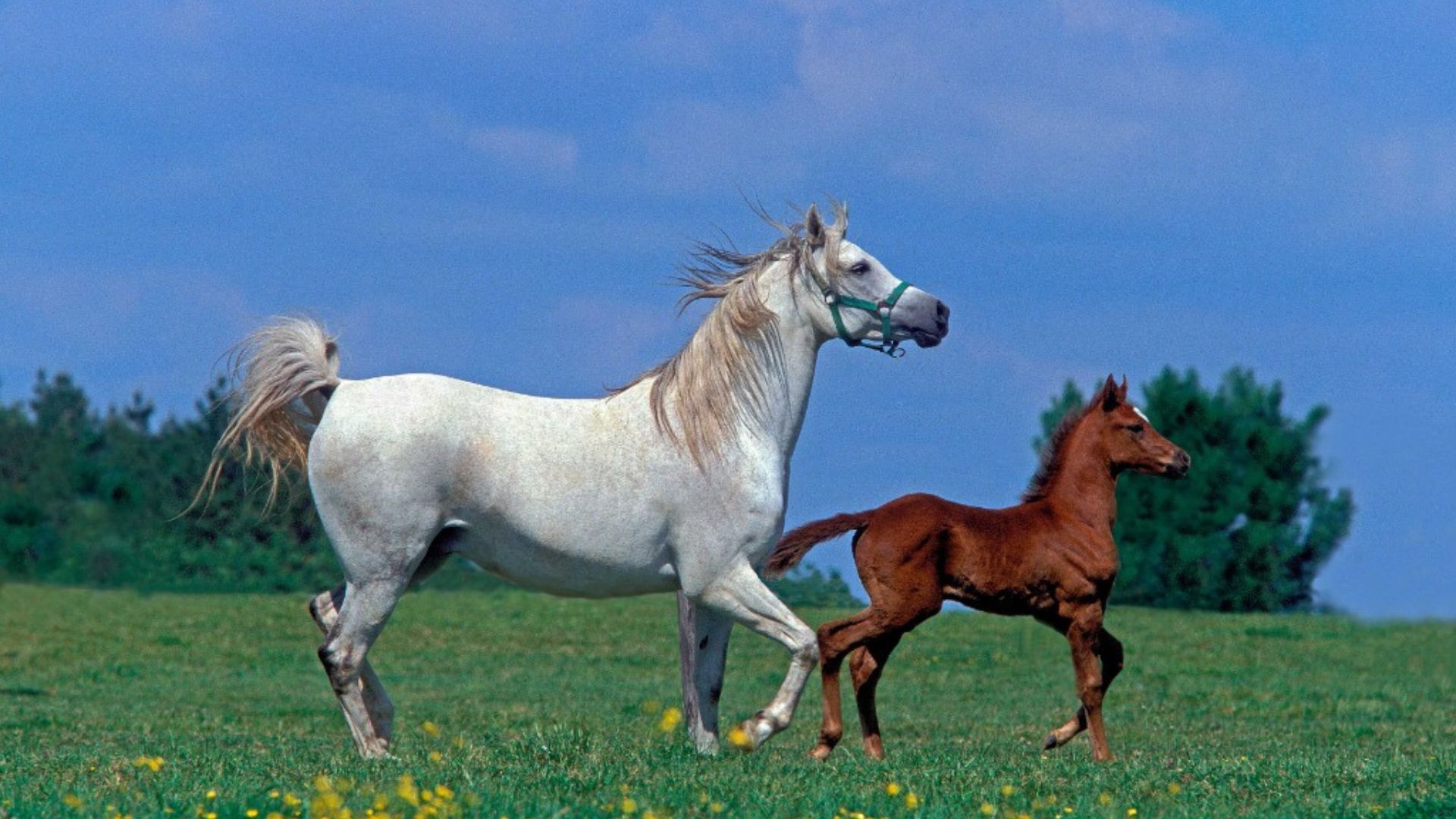
A Horse's Height: How It's Measured and a Reference Chart
Por Horse TV
22.08.2026
NEWS | Lifestyle
A horse’s height at the withers is one of the most important measurements for understanding its physical characteristics. Not only does it allow for comparisons of size between individual horses or breeds, but it also influences factors such as rider selection, equipment fit, and even the classification of certain horses.
Although many people refer to a horse’s “height,” in the equestrian world the correct term is “withers height,” a standardized measurement always taken from the same anatomical point.
What is a horse’s withers height?
Withers height is the vertical distance between the ground and the highest point of the horse’s withers.
The withers are located at the junction of the neck and the back, formed by the spinous processes of the first thoracic vertebrae. This point is used as a reference because it remains virtually unchanged regardless of the position of the head or neck, ensuring a reliable measurement.
For this reason, height at the withers is the standard measurement used by equestrian federations, breeders’ associations, and stud books around the world.
How do you measure a horse’s height?
To obtain an accurate measurement, it is best to follow these basic guidelines:
- Place the horse on a completely flat surface.
- Make sure the horse stands square, with its weight evenly distributed across all four legs.
- Keep the horse’s head in a natural position, without forcing it up or down.
- Use a hipometer or measuring stick with a horizontal arm, which is the most accurate tool for this purpose.
The measurement is taken by resting the stick on the ground and moving the horizontal arm until it gently touches the highest point of the withers.
If a hipometer is not available, a measuring tape can also be used, although the result will be less accurate.
In what units is it expressed?
In Spain and most of Europe, the rise is expressed in centimeters or meters.
In contrast, in countries such as the United Kingdom, the United States, and Australia, the traditional unit known as a “hand” is still used, which is exactly equivalent to 4 inches, or 10.16 centimeters.
For example:
- 15.2 hands = approximately 157 cm.
- 16.0 hands = approximately 163 cm.
- 17.0 hands = approximately 173 cm.
It is important to remember that the number after the period does not represent decimals, but rather additional inches.
Guideline Table for Height by Horse Type
Although each breed has its own standard, this classification serves as a general reference.

* In international competitions, the FEI sets the height limit for ponies at 148 cm without shoes (149 cm with shoes, according to the official measuring procedure).
Which breeds have the greatest height at the withers?
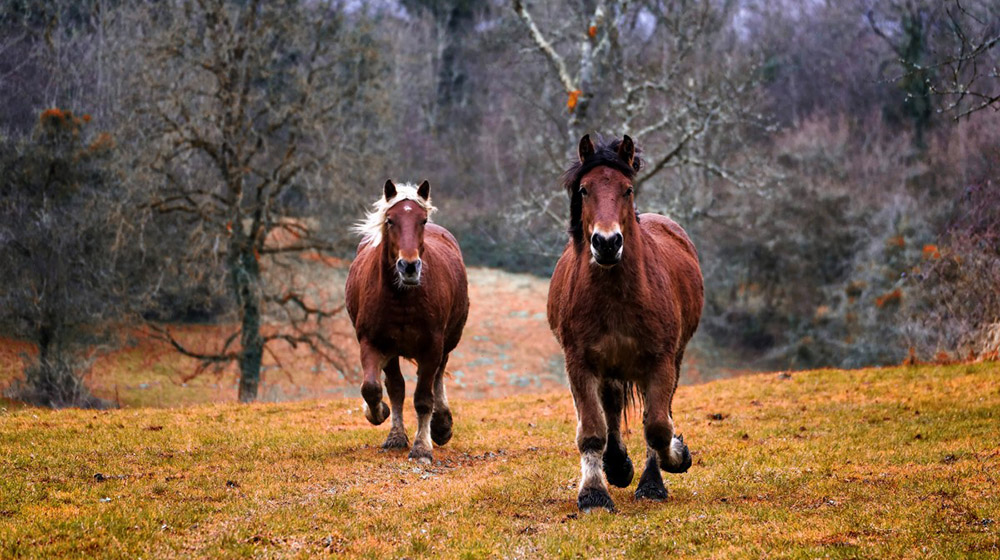
Draft breeds stand out for their large size.
Among them are:
- The Shire, considered one of the tallest horses in the world, with many individuals exceeding 180 cm.
- The Clydesdale, famous for its size and thick fetlocks.
- The Percheron, powerful but somewhat more compact.
- The Belgian Draft, one of the heaviest draft breeds.
At the opposite end of the spectrum are smaller breeds such as the Icelandic Horse, the Paso Fino, and various pony breeds.
Does height determine athletic performance?
Not necessarily. Although certain disciplines tend to favor specific sizes, performance depends on many other factors such as conformation, balance, genetics, training, and temperament. For example:
- In show jumping, horses between 165 and 175 cm predominate, although there are highly successful exceptions.
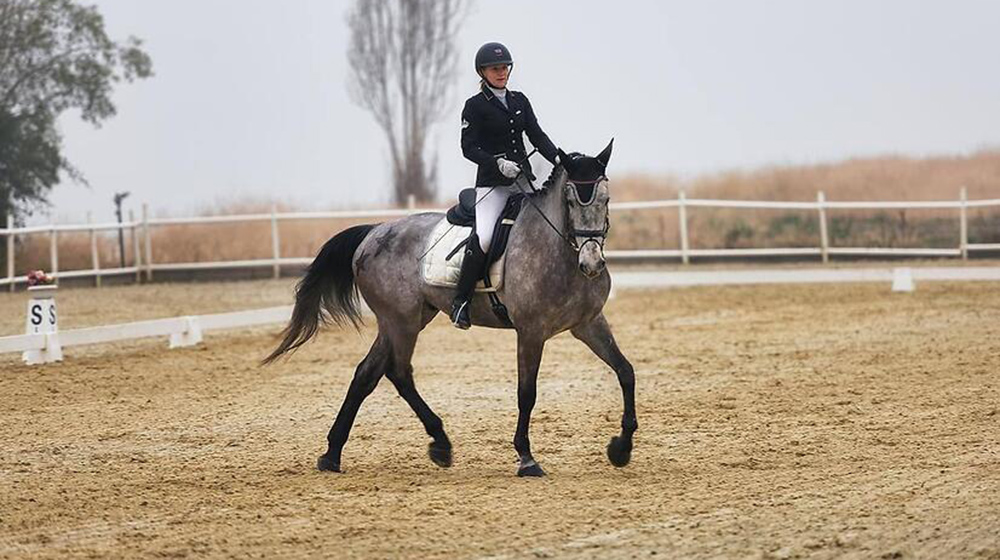
- In dressage, a medium-to-tall height often facilitates the amplitude of movements, but it does not guarantee better results.
- In endurance riding, smaller breeds such as the Arabian stand out for their stamina.
Ultimately, height is just one of many characteristics that influence a horse’s performance.
Can height vary with age?
Foals gradually increase in height as they grow, and most breeds reach their final height between the ages of 4 and 6, although some heavy breeds continue to develop physically for a little longer.
In healthy adult horses, height remains stable, except for minor variations resulting from hoof wear, shoeing, or the method of measurement.
A Key Measurement in the Equestrian World
Knowing a horse’s height allows you to better assess its proportions, compare it to breed standards, and choose the most suitable equipment or riding style.
Although size often catches the eye, it’s important to remember that height alone does not determine a horse’s quality. Its health, conformation, temperament, and training will continue to be the factors that truly make a difference, both in competition and in daily work.









_v2.svg)
_v2.svg)









_v2.svg)